Welcome to the Lawrence Bloomberg Faculty of Nursing
At the Lawrence Bloomberg Faculty of Nursing, you’ll find cutting edge research exploring the relevant healthcare challenges of our time. As one of the world’s premier nursing programs, we continue to build on over a century of nursing excellence as we prepare students at the graduate and undergraduate level, to be exceptional nursing leaders in a complex and globally connected health care landscape.
As we continue to advocate for the communities and people who are under-served by our health care systems, you will find us at the forefront of research and education that makes a difference.
This is Nursing in Action.
Why Choose Bloomberg Nursing?
-
Renowned and highly respected nursing researchers and educators who make major contributions to nursing knowledge, health policy and future practice
-
High quality student experience and generous funding support, including opportunities to engage in research
-
State-of-the-art simulation laboratory designed to provide hands-on, experiential learning in community, home, and acute care environments
-
Close partnerships with Canada’s leading teaching hospitals through the Toronto Academic and Health Sciences Network (TAHSN)
-
Highly competitive placements in leading teaching hospitals, community organizations and agencies across the GTHA
-
Continuous learning opportunities for advanced practice nursing through our esteemed Centre for Professional Development
Vision, Mission & Values
Our vision
Creating a connected, inclusive community that leads and pursues excellence in nursing education, research, scholarship, and practice.
Our mission
We aim to advance nursing education, research, scholarship, and practice through a culture of inclusive belonging, innovation, and collaboration that responds to the evolving needs of communities and health systems, locally, nationally, and globally. Through strong partnerships and bold inquiry, we are committed to educating nurses who excel in practice, and who pursue critical inquiry and scholarship, to generate and implement knowledge that promotes health for all, and improves equitable access to high-quality healthcare.
Our values
-
Embracing innovation and change
-
Undertaking rigorous scholarship and critical inquiry
-
Cultivating relationships and collaborations within our community
-
Engaging diverse people and perspectives with attention to inclusion, accessibility and Indigenous Reconciliation
Acknowledgement of Traditional Land
We wish to acknowledge this land on which the University of Toronto operates. For thousands of years, it has been the traditional land of the Huron Nation, the Seneca, and the Mississaugas of the Credit. Today, this meeting place is still the home to many Indigenous peoples from across Turtle Island and we are grateful to have the opportunity to work and learn on this land.
Inclusion, Accessibility and Indigenous Reconciliation at Bloomberg Nursing
Fostering a community of lifelong belonging and inclusion for our learners and broader community is a core value at Bloomberg Nursing. Building upon the work done over many years by our own Equity, Inclusion and Indigenous Reconciliation Committee, and in alignment with the Truth and Reconciliation Commission of Canada, we are strongly committed to visible and actionable objectives for inclusivity and accessibility, including pathways to seed feedback and encourage community input to generate new institutional approaches.
As stated in the Bloomberg Nursing 2026 – 2031 Strategic Academic Plan, one of our core principles is ‘engaging diverse people and perspectives with attention to inclusion, accessibility and Indigenous Reconciliation’. A pillar in meeting this principle is to cultivate an Inclusive, Connected Community.
Inclusion and Accessibility Working Group
In the fall of 2024, the Dean of the Lawrence Bloomberg Faculty of Nursing struck the Inclusion & Accessibility Working Group (IAWG). The Dean stated, “While our Faculty has a strong foundation of creating a supportive, equitable and inclusive environment in our administrative, academic and clinical settings, there is more work that can –and should – be done.”
The IAWG was tasked with generating recommendations which will help inform decisions regarding ways in which the Faculty integrates principles of inclusion and accessibility into the mission and functioning of the Faculty.
IAWG Purpose
The Inclusion & Accessibility Working Group (IAWG) was asked to provide recommendations on:
- Generating communications and pathways to enable all members of our community to engage in training opportunities that build awareness and capacity-building on principles of inclusion and engaging in difficult conversations.
- Further incorporating the principles of inclusion and accessibility into our academic, administrative and clinical settings.
- Assuring that our programs and curricula prepare our graduates to meet the needs of the diverse communities they will serve in their careers in Canada and around the world.
- Ensuring principles of inclusion and accessibility are integrated into our committees and decision-making structures and processes.
- Engaging in opportunities within the University of Toronto and broader communities to promote inclusion and accessibility within nursing.
IAWG Overarching Recommendations
In 2026, the IAWG finalized a report with three overarching recommendations:
- Promote Accessible and Inclusive Spaces and Communication Practices
- Foster and Support a More Diverse Bloomberg Nursing Community
- Develop an EDI Strategy for Bloomberg Nursing that Promotes a Culture of Accessibility and Inclusivity
University of Toronto EDI Resources
2026 – 2031 Strategic Academic Plan

The Lawrence Bloomberg Faculty of Nursing’s 2026-2031 Strategic Academic Plan, is centered around a goal of fostering a deep sense of belonging within in our community and embracing a bold and nimble approach to new initiatives.
In an increasingly complex healthcare landscape, it is vital that we lean into the strength of our nursing community to build adaptive responses to rapidly changing health system needs. Through our shared and diverse perspectives and unique contributions, we are at the forefront of developing creative solutions to real-world healthcare challenges, and increasing access to healthcare when and where it is needed most.
Our Pillars
Prepare students to be adaptive, lifelong learners, exceptional clinicians and leaders who transform health and health systems across diverse communities.
Expand our global role as a primary source of high-quality evidence for health systems and clinical health through innovative inquiry and collaboration.
Cultivate a diverse community that fosters inclusivity, lifelong belonging and dynamic connections.
Advance and advocate for sustainable, equitable health systems innovation.
Our Academic Planning Process
In March 2025, the Lawrence Bloomberg Faculty of Nursing embarked on a transparent and collaborative consultation process with our community of students, faculty, alumni, staff, and external partners to inform Bloomberg Nursing’s vision, priorities and implementation plan.
In phase 1 we developed a core engagement team to assist us in the consultation process.
In phase 2, the core engagement team conducted interviews with a variety of partners. We also held focus group sessions and launched a feedback survey which was disseminated across our community.
In phase 3 we held four Strategy Hives, which were targeted focus group sessions on key themes that emerged from phase 2.
Throughout the process we engaged over 655 people across our community.
A Century of History
Over one hundred years of nursing excellence at the Lawrence Bloomberg Faculty of Nursing at the University of Toronto, has been developed and nurtured by a strong commitment to leadership and a willingness to push the boundaries of what nursing has to offer, in our research, our education, and our clinical practice.
This is Nursing in Action.
A First in Canada

1920
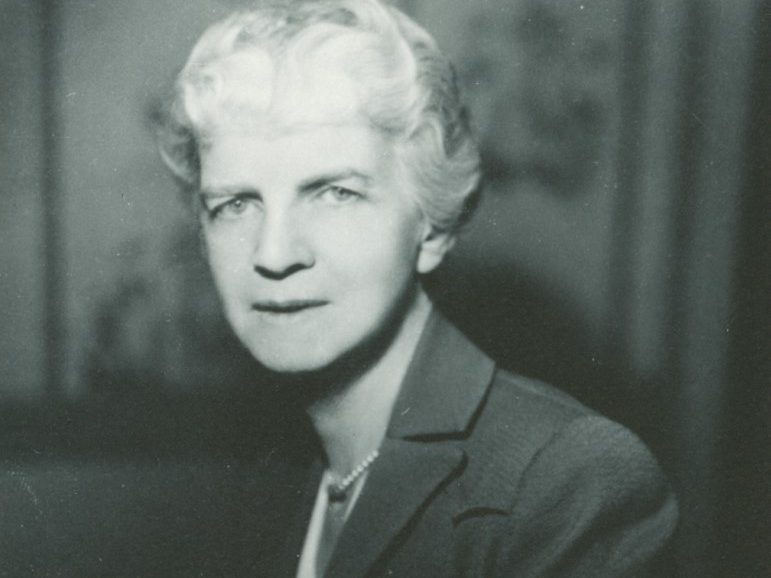
Ms. E. Kathleen Russell, a nurse with a radical idea, established the Department of Public Health Nursing as an experiment in education science. Her ground-breaking vision was to include social welfare and public health education into the traditional hospital-focused training of nurses. Ms. Russell’s determination and leadership served to bolster the education of nurse leaders in administration, education and public health during a critical time following the Spanish Influenza pandemic in 1919.
1928-1942

Ms. Russell continues her forward momentum by Canada’s first nursing program to be completely university-based. The Department of Nursing is merged with the School of Hygiene at the University of Toronto, until in 1933, it becomes an independently recognized School of Nursing. In 1942 the three-year BScN degree evolved into a four-year program, the first of its kind in Canada, and both the School and Ms. Russel were lauded internationally for their progressive approach to learning, dubbed the “Toronto model of education,” as it came to be known.

Advancing Education

1970
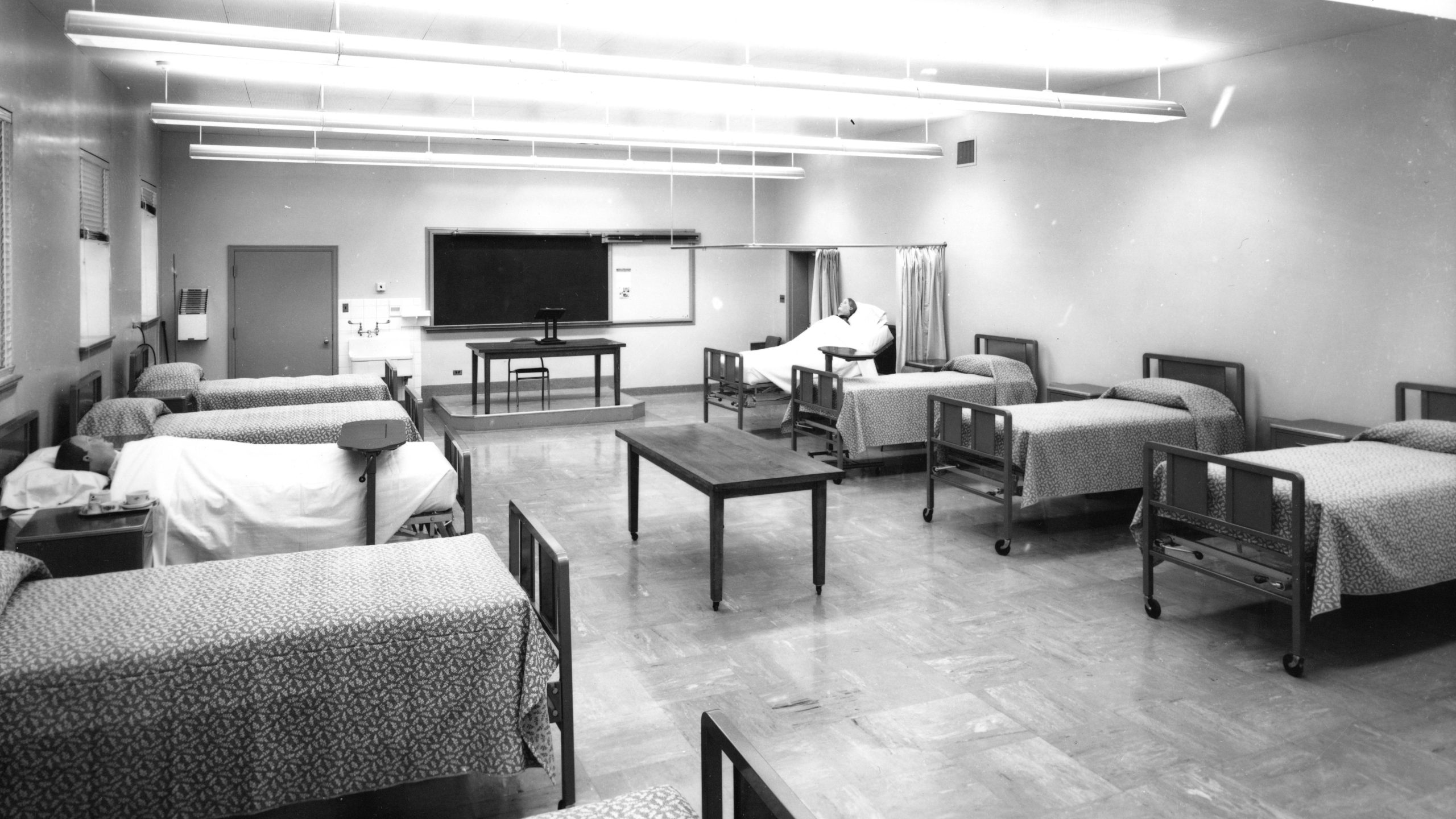
The School of Nursing established a master’s program which led to faculty status at the University of Toronto in 1972
1991
The PhD program in nursing science was created helping to build a foundation for nursing excellence in research.
2001
Another first from the Faculty of Nursing is the creation of the Master of Nursing, Nurse Practitioner Program. This innovative and online master’s degree, helped to establish a major new opportunity for nurses as leaders through a range of practice roles for advanced practice nurses across Canada.
Early 2000’s
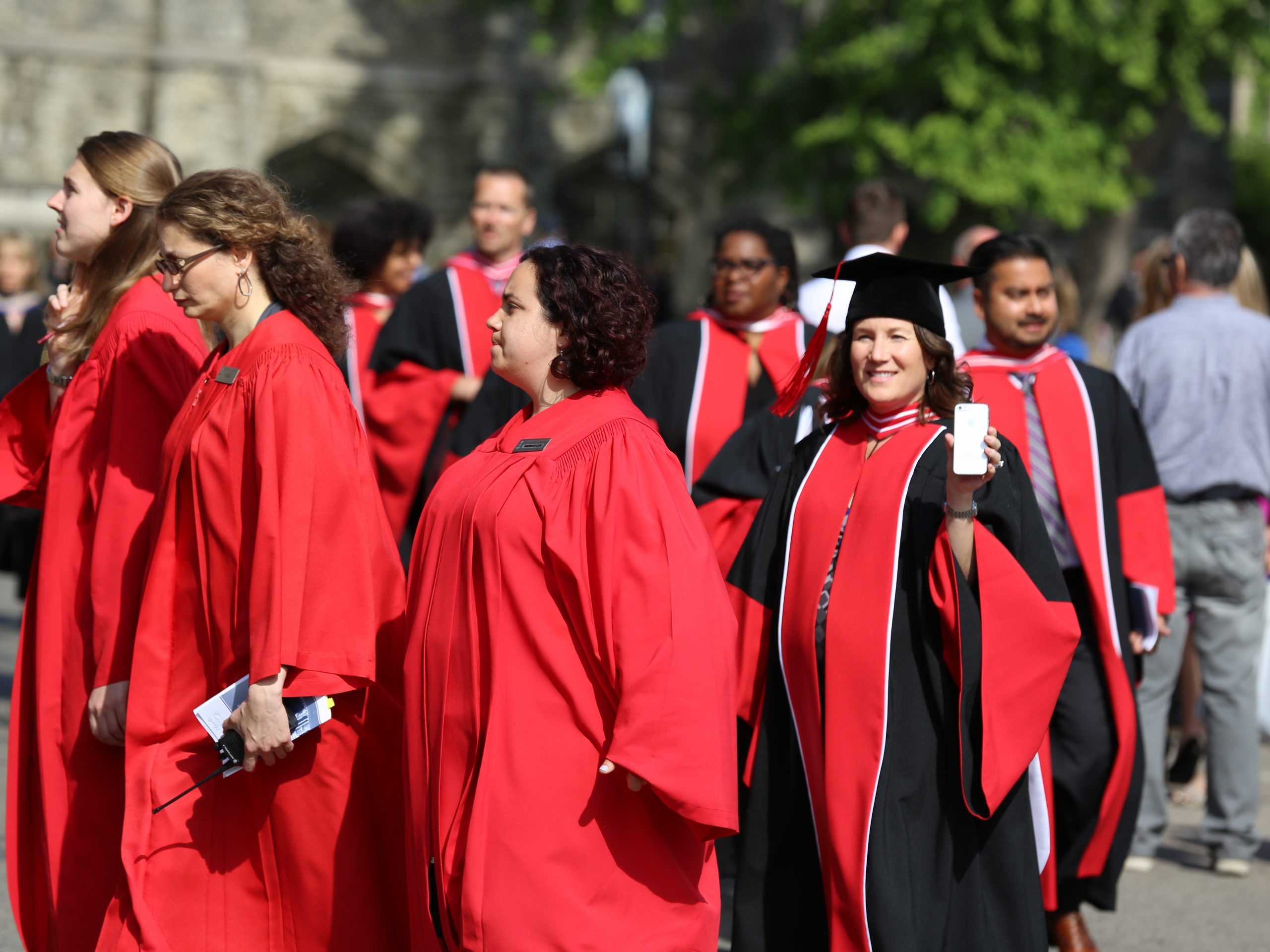
The demand for highly qualified nursing applicants continued to grow. The Faculty of Nursing decided to establish the first two-year second entry (or accelerated) Bachelor of Science in Nursing. This highly effective approach to nursing education is adopted at higher education institutions across the country.

A Research Powerhouse
1980’s and 1990’s
The Faculty of Nursing earns a reputation as a research powerhouse attracting world-class researchers and scholars in health services and administration. Pursuing exploration and examination of key health issues through quantitative and qualitative research, the faculty’s researchers initiated clinical trials and care evaluations that continue to shape nursing practice and policy and contribute to improving health care outcomes for many populations.
Lawrence Bloomberg makes history

2007
The Faculty of Nursing received a historic donation from financier and philanthropist, Lawrence Bloomberg – the largest ever given to a Canadian nursing school. In recognition of this visionary gift, the Faculty is renamed the Lawrence Bloomberg Faculty of Nursing, the first named faculty of nursing in Canada
A New Chapter
2023 and beyond
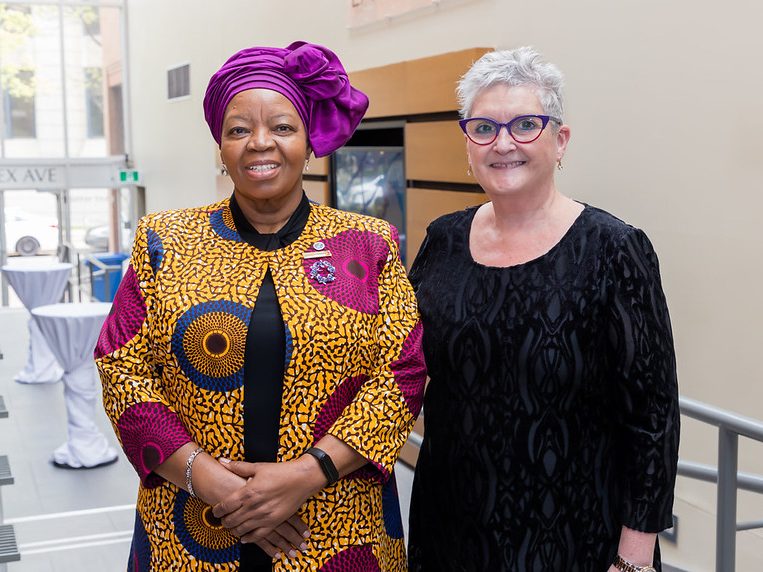
The Lawrence Bloomberg Faculty of Nursing launched a new brand identity This is Nursing in Action which exemplifies the Bloomberg Nursing community’s approach to nursing practice, education and research. Our students and faculty have expanded their scope of leadership and excellence to include the global health landscape and are fostering new and engaging ideas to promote equitable care and a socially just society. Our researchers continue to advance their scholarship, leading in areas of innovation for quality care across the lifespan, and we continue to look to the future of nursing with hope and inspiration for the changes that are to come
Directors and Deans
Edith Kathleen Russell
1920-1928
Director, Department of Public Health Nursing
School of Medicine
Edith Kathleen Russell
1928–1933
Director, Department of Public Health Nursing
School of Hygiene
Kathleen Russell
1933–1952
Director, School of Nursing
University of Toronto
Nettie Douglas Fidler
1952–1962
Director, School of Nursing
University of Toronto
Helen M. Carpenter
1962–1972
Director, School of Nursing
University of Toronto
M. Kathleen King
1972–1979
Dean and Professor,
Faculty of Nursing
Phyllis E. Jones
1979–1988
Dean and Professor,
Faculty of Nursing
Dorothy Pringle
1988–1999
Dean and Professor,
Faculty of Nursing
Gail Donner
1999–2001
Interim Dean and Professor,
Faculty of Nursing
Dyanne Affonso
2001–2004
Dean and Professor,
Faculty of Nursing
Diane Doran
2004–2005
Interim Dean and Professor, Faculty of Nursing
Sioban Nelson
2005–2013
Dean and Professor,
Lawrence Bloomberg Faculty of Nursing
Linda McGillis Hall
2013–2014
Interim Dean and Professor,
Lawrence Bloomberg Faculty of Nursing
Linda Johnston
2014-2023
Dean and Professor,
Lawrence Bloomberg Faculty of Nursing
Robyn Stremler
2024-Present
Dean and Professor,
Lawrence Bloomberg Faculty of Nursing
2024 Provostial Review
Bloomberg Nursing completed our University of Toronto Quality Assurance (UTQAP) cyclical review in 2024.
What is the UTQAP Cyclical Review?
Under the University of Toronto Quality Assurance Process (UTQAP), all units and their academic programs must be reviewed a minimum of every 7-8 years.
The UTQAP cyclical review provides an unparalleled opportunity to secure the expert advice of leaders in the field concerning academic and administrative issues; assess our performance against leading international programs; identify areas where we can do better and vigorously pursue improvements; secure guidance on key strategic directions; and celebrate successes.
The review is commissioned by the Vice-President and Provost and includes a self-study that addresses the review terms of reference and discusses the Faculty’s accomplishments, culture of excellence and progress in achieving our academic goals since our last Provostial review in 2017.
Self Study
The first phase of the cyclical review process involved conducting a self-study of Bloomberg Nursing.

External review
The second phase of the review involved a site visit by three external reviewers who met with members of the Bloomberg Nursing community (faculty, staff, students, alumni, and leadership from clinical partners) to inform a final report and recommendations. Their report and recommendations will helped inform the development of our 2026-2031 Strategic Academic Plan.